Florida winters are mild, but summers? They bring relentless sun, high humidity, and serious demands on your air conditioner. If you live in the Sarasota/Bradenton region, the right window treatments can make a big difference in how hot your home feels and how much you spend on cooling.
At ShutterShop, we’ve helped many homeowners install window coverings that cut heat, preserve comfort, and boost curb appeal. This post shares insights drawn from local climate realities and solid science so you can make smart decisions for your own home.
Why Window Treatments Matter More in Florida
Windows are among the weakest points in a building’s thermal envelope. The U.S. Department of Energy notes that in cooling seasons, roughly 76 percent of sunlight hitting a standard double-pane window becomes heat inside the home.
In a hot climate like ours, that heat gain forces your HVAC system to run harder. The more direct sun your windows receive, the more urgent the need for blocking or buffering that energy. A treatment that reduces interior solar gain by 40 to 60 percent can lower your cooling loads noticeably.
One more point: many homeowners neglect adjusting or using their treatments dynamically. According to DOE, 75 percent of window coverings stay in one position all day, even when conditions call for change.
To get real performance, the treatments must be chosen well and used well.
What Works Well in Florida: Performance-Oriented Options
Below are treatments that we often recommend and install in this region, along with how they perform under Florida sun.
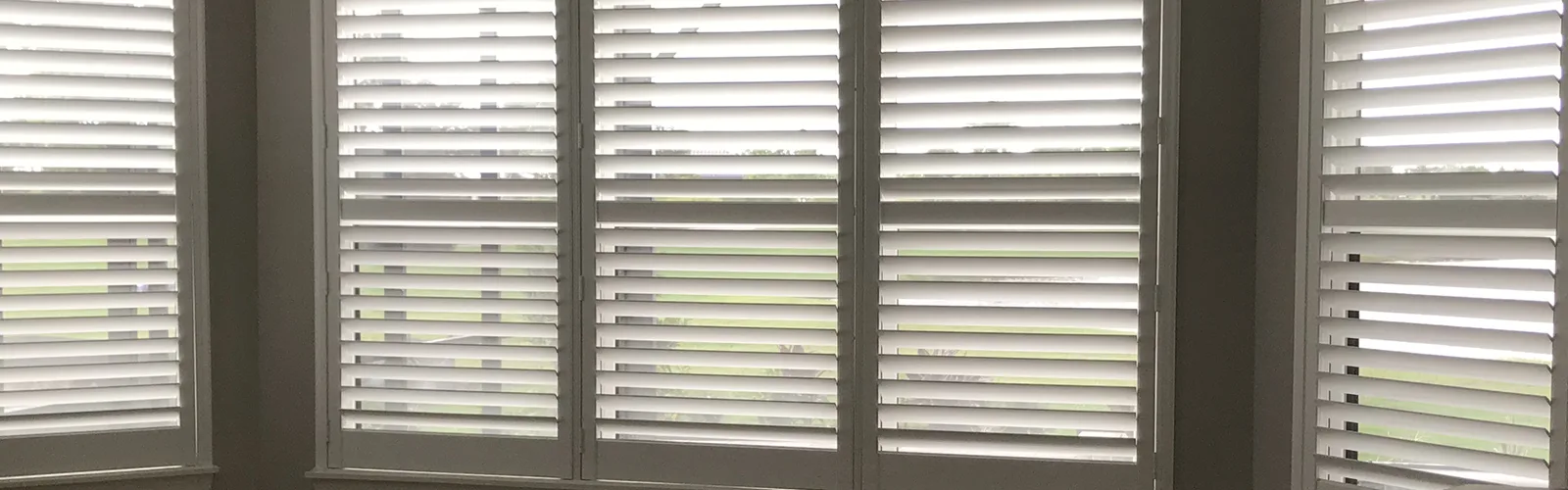
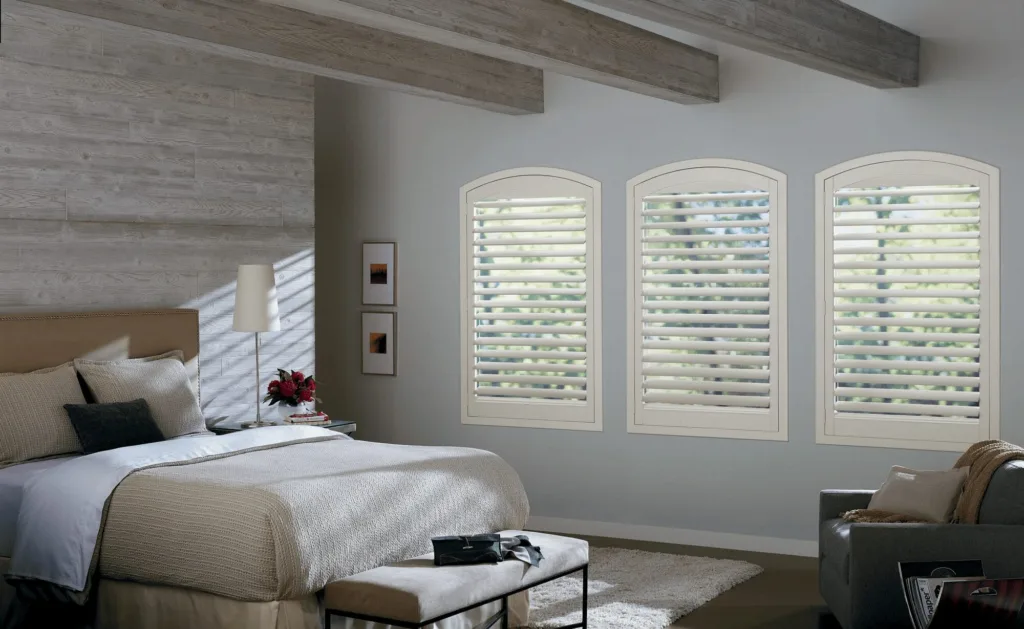
Plantation Shutters (Especially Composite or Weather-Stripped Types)
Plantation shutters are a favorite for a reason. Properly sized and fitted within the window frame, they limit air leakage around edges. Some models even include weather stripping between louvers to reduce convective exchange.
Composite types (e.g. polymer or engineered synthetic materials) are more stable under Florida humidity and less prone to warping than pure wood.
When louvers are closed and aligned, shutters block direct sunlight and stop air from brushing window surfaces: two key paths for heat to get inside. In our market, we see that homes with quality shutters often need less frequent runtime from AC in rooms that face south or west.
Cellular (Honeycomb) shades
If you prefer a softer fabric look, cellular shades (sometimes called honeycomb shades) are among the best-performing fabrics for energy control. Their design traps air in pockets, acting like a layer of insulation. DOE data shows tightly fitted cellular shades can reduce heat gain by up to 60 percent, and reduce heat loss (in cooler conditions) by 40 percent.
In our region, double-cell structures with light or reflective coatings tend to yield better performance, especially on windows with heavy sun exposure. Side tracks or wall-sealing edges help avoid leaks of hot air around the sides.
Reflective or Solar Window Films
If you’re working with existing windows or want to preserve view but reduce heat, a quality solar film is worth considering. These films reflect or absorb near-infrared portions of sunlight (those wavelengths that do most of the heating) while allowing visible light in.
One caution: films that absorb too much heat may stress insulating glass unit (IGU) seals unless the manufacturer approves their use. Always work with a professional installer. These films work well in combination with interior shades or shutters.
Exterior Shades and Awnings
Shading on the outside of the glass is extremely effective because it intercepts solar radiation before it reaches the window. According to DOE, awnings can reduce summertime heat gain by as much as 65 percent on south-facing windows and up to 77 percent on west-facing windows.
Exterior roller shades or pergola-style shades also help, especially for large windows or glass sliders. In our coastal environment, we favor durable, fade-resistant fabrics and components rated for wind and salt air.
How to Choose for Your Specific Windows
You want more than good looks. You want measurable cooling relief. Here’s how to approach it:
Match the Treatment to Sun Exposure
- South and west windows get the harshest afternoon sun. Use shutters or high-performance cellular shades with reflective backing.
- East windows warm early in the day; treatments can block morning sun but let gentle light through later.
- North windows often need less aggressive shading, so lighter treatments suffice there.
Fit and Sealing Count
A treatment that leaves gaps defeats its purpose. Shutters should mount snugly inside the frame. Cellular shades should come with side channels or contoured edges. Exterior shade systems must bear against overhangs or frames to prevent light infiltration.
Operability and Use Habits
Even the best treatments fail if left static. Motorized controls or timed automation help ensure shades close during peak sun hours without requiring manual action. In rooms where manual use is acceptable, get in the habit of closing treatments in the late morning and opening them again in evening.
Durability in Florida
Humidity, salt air, and strong UV demand durability. Composite shutters resist warping. UV-stabilized fabrics or films resist fading. Fasteners, tracks, and hardware should be rust-resistant (stainless, anodized, or high-grade finishes). We stress that clients factor lifespan and maintenance into their decisions.
Case Example: Typical Afternoon Sun Filtration
Consider a west-facing living room with large windows. Without treatment, sunlight slams in, heats the interior surfaces, and forces the AC to combat that added load.
- With composite shutters closed, direct sun is blocked, and louver alignment can deflect light upward or downward as needed.
- If a cellular shade is installed behind the shutter (dual-layer strategy), the shade’s insulating pockets trap residual heat.
- If a neutral tint or film is added on the window, less infrared energy reaches the shutter or shade.
- The AC runs less. The interior stays cooler. The floor and furnishings avoid overheating.
In our experience installing in Sarasota homes, combining two techniques (shutters plus film or shade) often yields the best result, particularly in rooms that face the Gulf or have large expanses of glass.
Monitoring Performance
Once treatments go in, keep tabs on how much your cooling demand changes. Some homeowners see a drop in interior temperature of 3–5°F in treated rooms, or reduced runtime on thermostats. Use your utility bills as feedback. If expected savings don’t show, reexamine how often you open/close the treatments or whether gaps are undermining performance.
Final Thoughts
Cooling a Florida home efficiently is about reducing the heat you let in, and treatments at your windows are among the most accessible ways to do that. These suggestions reflect the specific challenges our region presents: late-afternoon sun, high humidity, and the need for durability.
If you’d like help assessing your windows and recommending treatments that satisfy both style and function, get in touch with us at ShutterShop. Together we’ll pick options that reduce your cooling cost and enhance comfort without compromising your home’s look.
For the Best in American-Made Custom Plantation Shutters and Other Window Treatments, Call ShutterShop
Ready to see how plantation shutters can help your home feel more comfortable year-round? Contact ShutterShop today! Our team specializes in custom-fit shutters designed to last, and we’ll help you choose the perfect look for your Sarasota or Bradenton home.
Give us a call today at (941) 745-5950 to schedule a free consultation, or visit our showroom at 3103 81st Ct E, Suite 101, Bradenton, FL 34211. And follow us on Facebook and YouTube to see our recent work and learn more about plantation shutters, blinds, and other window coverings!